
The Vortex Tunnel is based on the principle of sensory conflict illusions: conflicting signals from the human visual, vestibular (balance), and tactile systems cause the brain to experience illusions of dizziness, weightlessness, and a spinning, downward-spiraling sensation. The system comprises four modules working in concert: a mechanical rotating structure, an optical visual system, a safe walkway platform, and an integrated audio-visual system.
I. Underlying Logic of the Physical Illusion (Human Sensory Perception)
Human balance perception relies on three sets of signals:
Vestibular system (inner ear): Senses the head's actual orientation; when standing on a stationary bridge, the inner ear transmits signals indicating "body at rest" and "ground stable."
Visual system (eyes): As the spiral patterns on the tunnel walls rotate continuously in the opposite direction, the eyes transmit signals indicating "surroundings spinning rapidly" and "body falling into a vortex."
Proprioception and tactile sense (hands and feet): With feet on a fixed bridge and hands on stationary handrails, skin and muscles transmit signals indicating a "stationary standing" state.
The brain prioritizes visual input; when the visual perception of a spinning vortex conflicts sharply with the "stationary" signals from the inner ear and tactile system, the brain cannot reconcile the body's orientation. This triggers sensations of dizziness, loss of balance, weak knees, and the feeling of being sucked into the vortex—creating the core effect of the Vortex Tunnel.
II. Mechanical Structure and Operational Principles
1. Dual-layer separated structure (Key design feature)
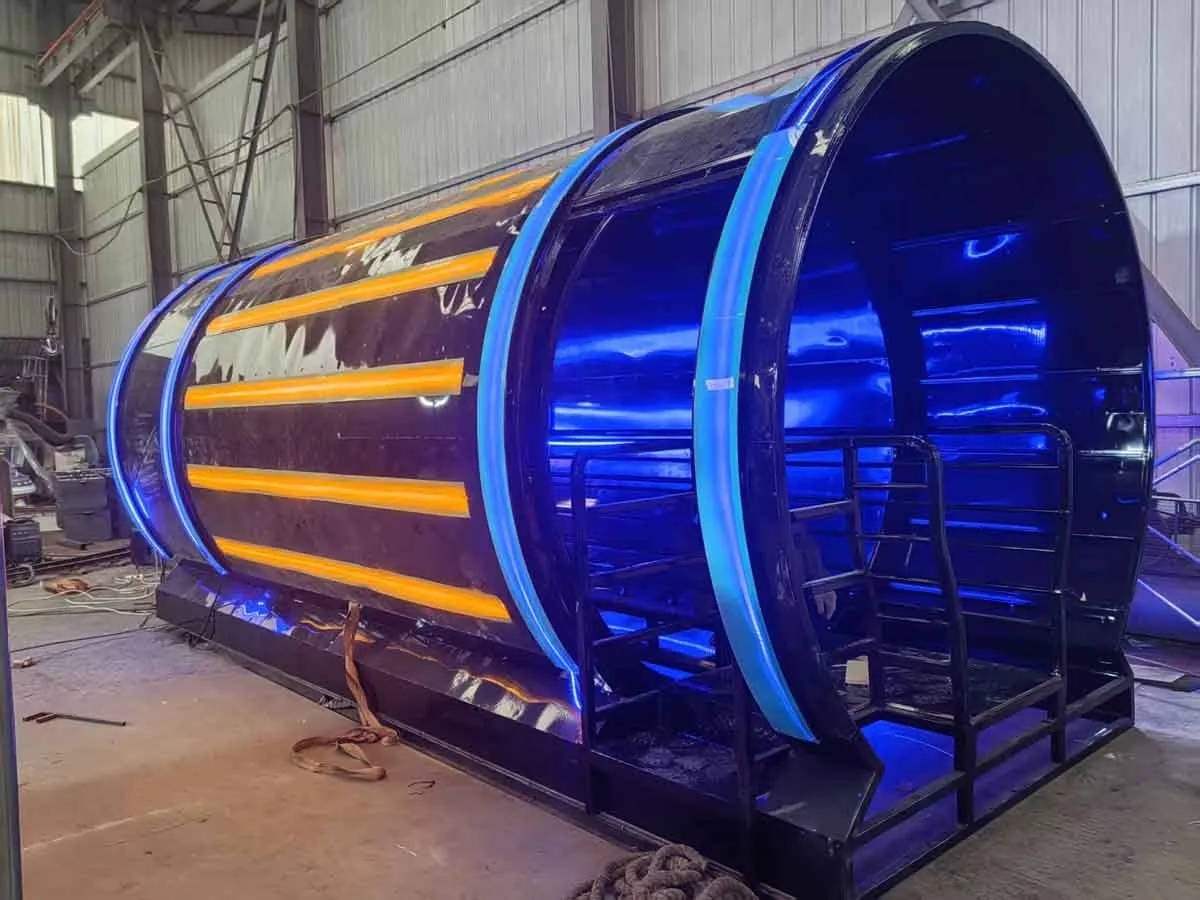
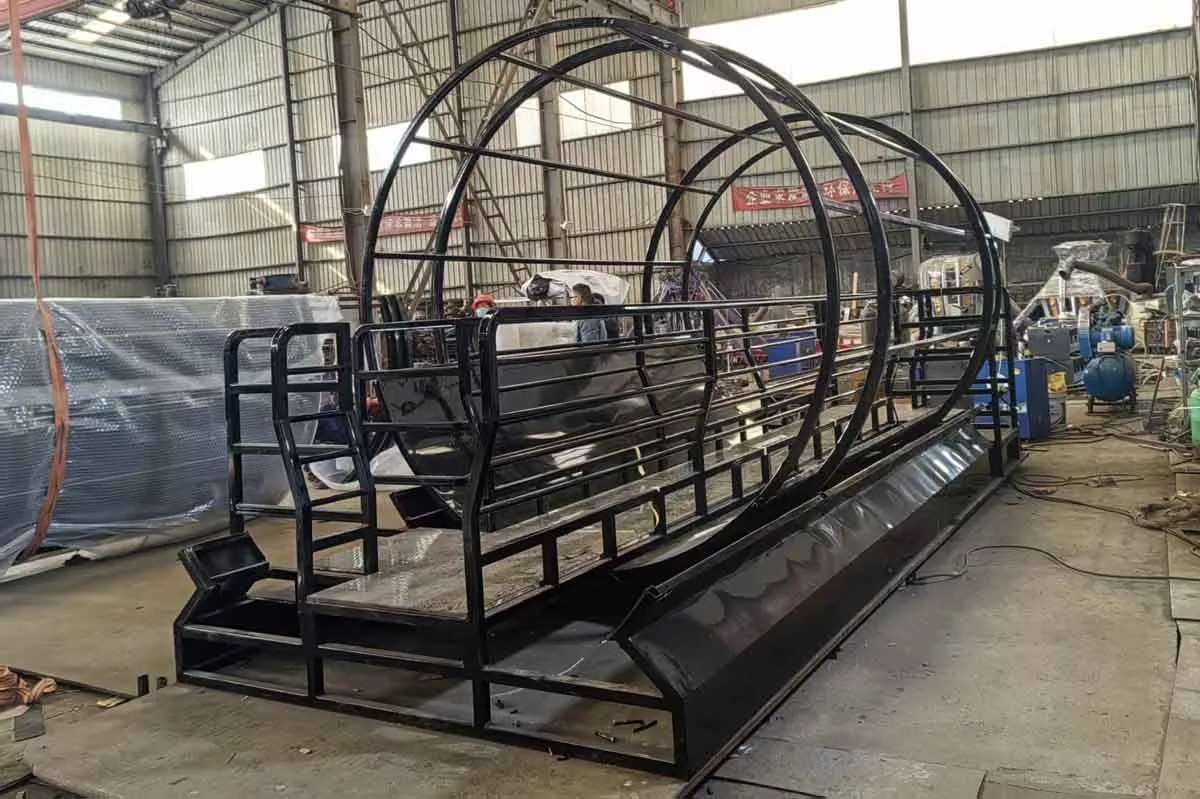
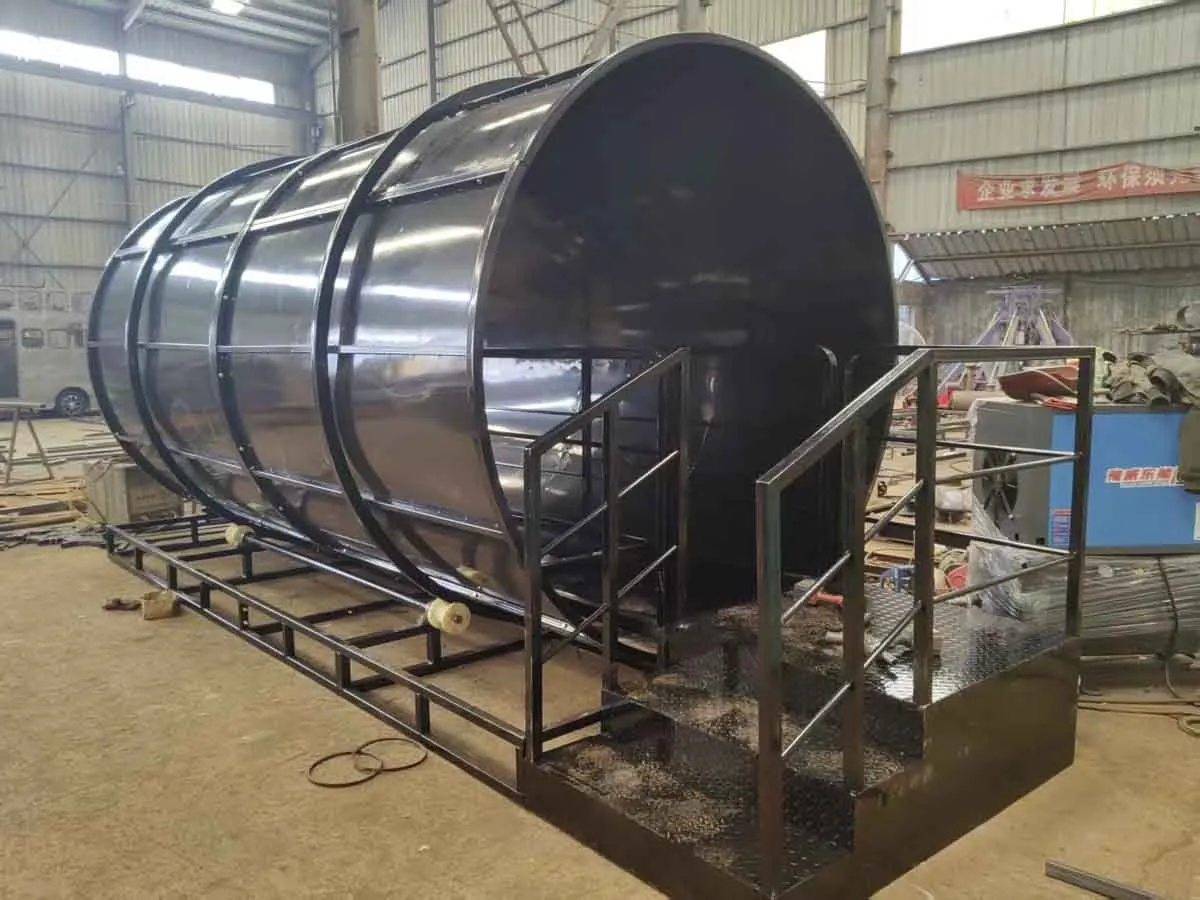
The tunnel consists of an outer rotating cylinder and an inner stationary safety walkway; the two are completely separate and do not make contact:
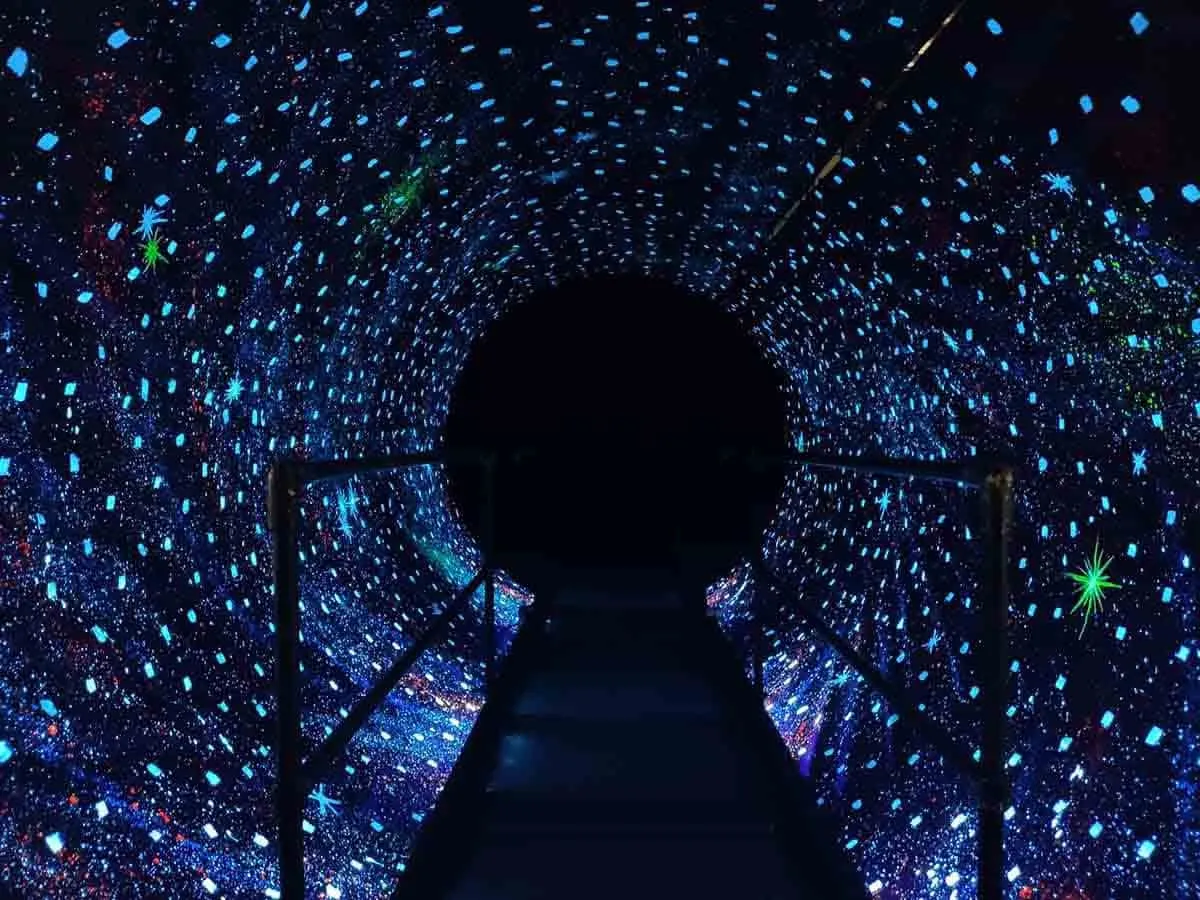
Inner layer: A stationary steel pedestrian bridge featuring non-slip handrails and a flat walking surface; it remains completely still and serves as the area where visitors actually stand.
Outer layer: A rotating cylindrical frame (constructed from PVC, fiberglass, or truss rings) with an interior surface featuring spiral gradients, radial patterns, or tornado-like graphics; it is driven by a motor to rotate at a constant speed.
2. Rotary Drive System Operation
A bottom-mounted variable-frequency geared motor drives a transmission chain or gear ring, rotating the outer cylindrical body slowly and steadily around its central axis (speed: 5–12 rpm; speeds exceeding this range can induce severe nausea, so the system operates within the venue's standard low-speed range).
Multiple sets of support rollers cradle the rotating cylinder to minimize friction noise; an electromagnetic brake locks the cylinder instantly upon power loss to ensure safety.
The variable-frequency controller allows for adjustable speed, forward/reverse rotation, and intermittent start-stop cycles, enabling synchronization with lighting and sound effects.
3. Cylinder Airflow Effects (Inflatable Vortex Tunnel)
The inflatable Vortex Tunnel utilizes high-power centrifugal fans to deliver continuous airflow tangentially along the cylinder walls. The inflatable fabric expands and undulates slightly under the airflow, simulating the turbulence of a tornado and intensifying the sensation of being enveloped by a violent vortex; the airflow operates in a closed loop with no external leakage.
III. Visual-Optical Enhancement Principles (Amplifying the Illusion of Vertigo)
Spiral Perspective Pattern Design
The interior walls feature printed spiral stripes, radiating nebulae, and gradient apertures that converge from both ends toward the center, aligning with human perspective perception. As the cylinder rotates, the stripes appear to flow continuously into the depths of the tunnel, visually creating the effect of an infinitely extending, inward-collapsing black hole vortex that intensifies the sensation of falling.
Immersive Dynamic Lighting System
RGB ring LED strips, strobe lights, and laser beams are evenly distributed along the interior of the cylinder:
The lights rotate slowly in sync with the cylinder; the interplay of light and shadow with the spiral patterns doubles the visual sense of motion.
Adjustable effects—including gradients, rapid strobing, and flowing light—eliminate environmental reference points in the dim setting; the eye perceives only the rotating interior walls, significantly undermining the sense of stability.
The absence of overhead glare isolates the viewer from static external reference points, further amplifying the illusion. Diagram illustrating the principle of light reflection in a mirrored tunnel
IV. Audio-Visual Integration to Enhance Immersion
Directional Spatial Audio
Speakers surrounding the tunnel play synchronized sound effects: howling winds, low-frequency rumbles suggesting spatial distortion, and sci-fi sounds of space-time tearing. Bass vibrations are transmitted through the steel framework to the bridge deck, allowing visitors to feel the vibrations physically and creating a multi-sensory illusion.
Synchronized Timing Control
A central PLC system coordinates motor speed, the flow rate of lighting effects, and audio rhythms. Synchronizing these elements prevents the loss of impact caused by mismatches between visuals, sound, and rotation.
V. Principles for Safe and Stable Operation (Protective design that does not disrupt the illusion)
Complete isolation between inner and outer layers ensures the rotating cylinder never contacts pedestrian handrails or the bridge deck;
Multiple protection systems cover emergency stops, overloads, and electrical leakage; the motor automatically slows down and shuts off if overheating occurs;
Widened bridge deck and raised handrails provide a stable tactile reference for visitors, preventing actual falls (the design creates an illusion of vertigo but poses no risk of physical tipping);
Translucent buffer zones at the entrance and exit minimize the visual contrast experienced when entering or leaving, thereby reducing severe discomfort for visitors.